
How to adjust Terminal Settings/Defaults
This document will detail the terminal settings page and show how to change system defaults on the terminal.
How to find the Terminal Settings
-
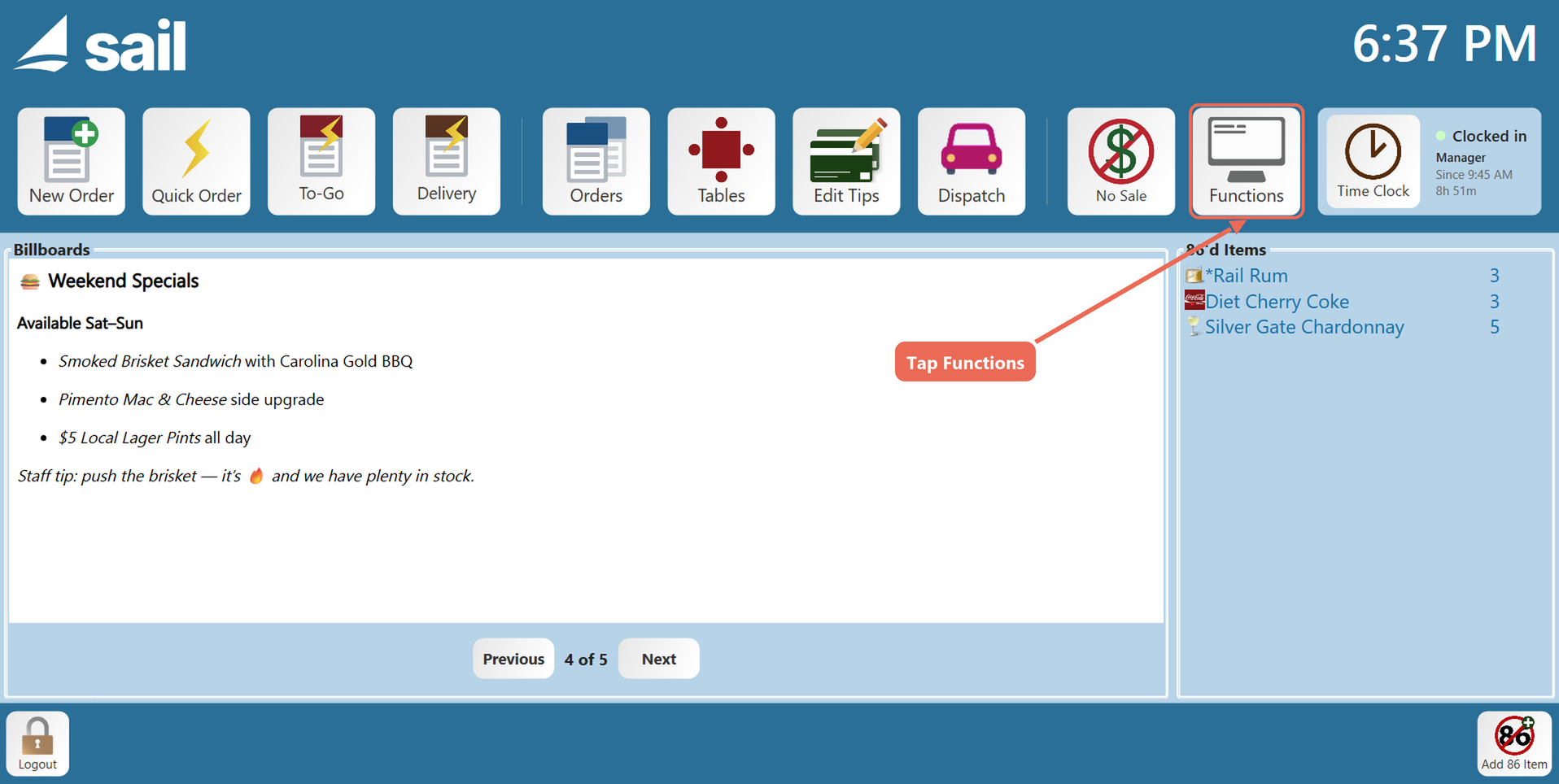
Navigate to the Functions page.
-
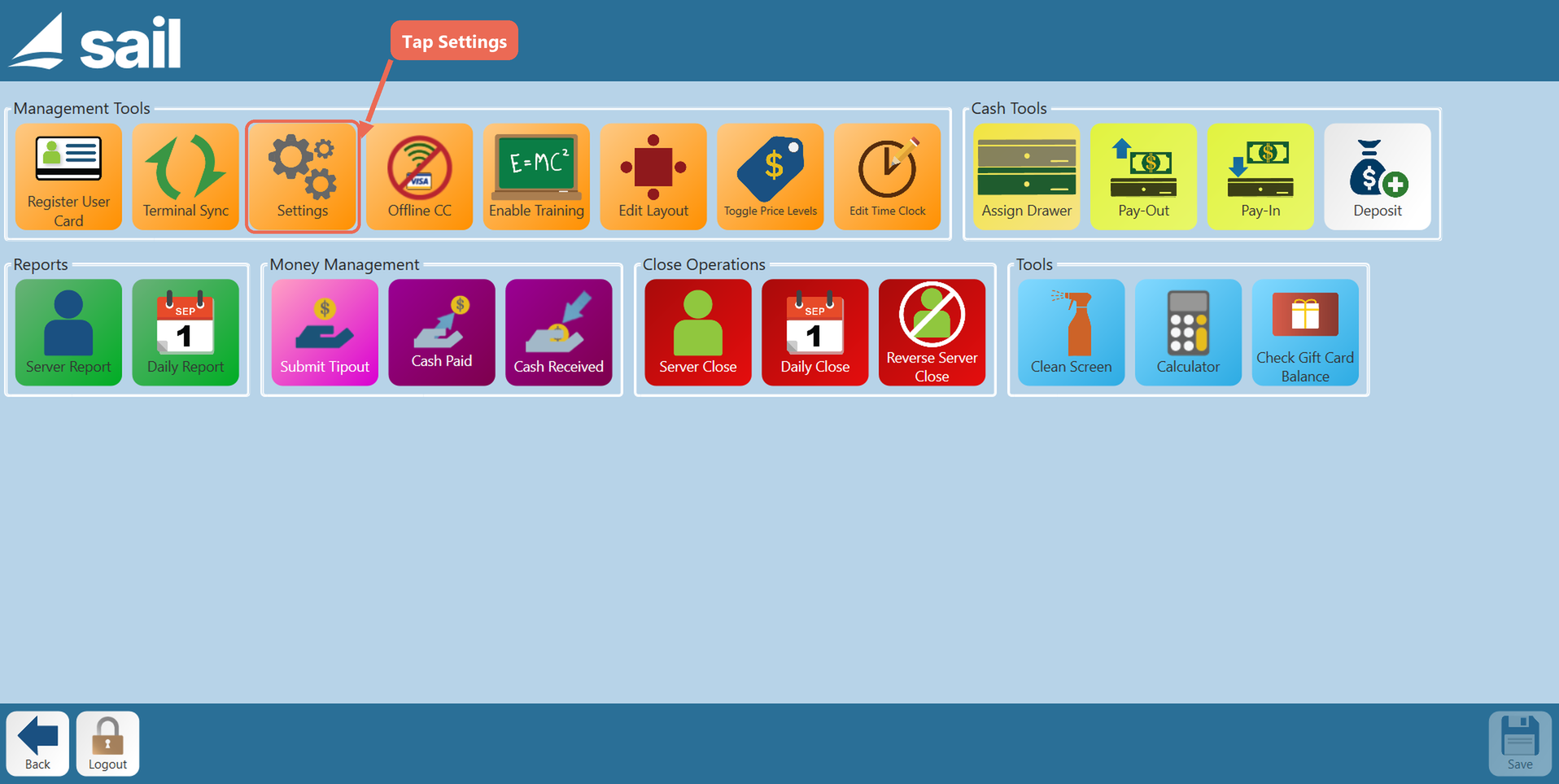
Select the Settings button.
-
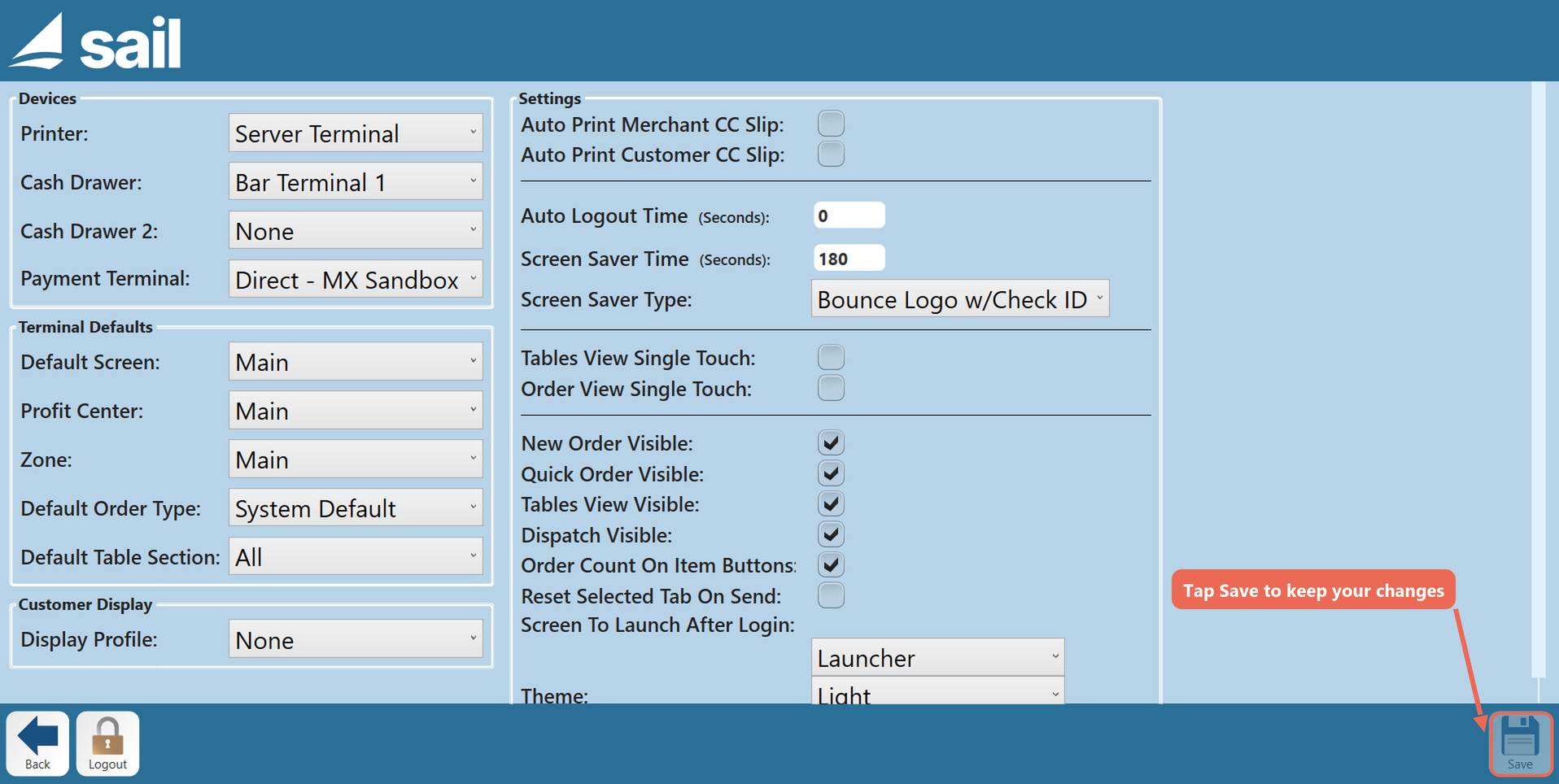
The settings page will appear next. After you change a setting, tap Save in the bottom right corner to keep it.
Terminal Settings
Devices
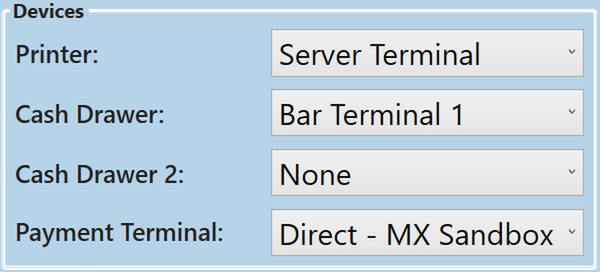
1. Printer: This dropdown shows all available printers that can be assigned to the terminal. Typically, we name each printer to match the terminal it’s connected to, making it easy to select the correct one. This ensures receipts, tickets, or other print jobs are sent to the expected location.
2. Cash Drawer: Use this setting to assign a cash drawer to the terminal. Just like printers, cash drawers are usually named to match the terminal they’re connected to, simplifying setup and identification. The terminal will automatically open this drawer during cash transactions.
3. Cash Drawer 2 (optional): If you have a second cash drawer connected to the same terminal—common in setups with two bartenders—you can assign it here. When using two drawers, the system will determine which drawer to use based on the bartender logged into the terminal.
4. Payment Terminal: This setting links the terminal to your payment device or credit card processor. It can be set to use the terminal’s built-in card swipe or an external EMV/chip reader. Like printers and drawers, payment terminals are usually named after the terminal they’re paired with for easier identification and configuration.
Terminal defaults
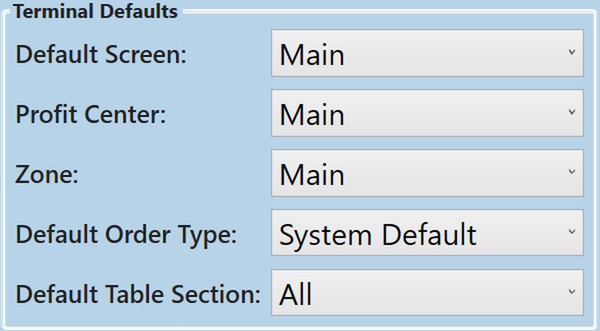
5. Default Screen: This setting connects the terminal to your Backoffice configuration. Most locations will only see one option here, making setup quick and straightforward.
6. Profit Center: Assigns all sales from this terminal to the designated Profit Center. This is useful for separating sales by area (e.g., bar vs. dining room) for better reporting and accountability.
7. Zone: Set the zone where the terminal is physically located. Zones help manage things like printer routing & pricing without affecting reporting.
8. Default Order Type: Choose the default type of order that opens when you start a new ticket (e.g., Dine In, Takeout, Delivery). Most systems are set to "Dine In" by default, but this can be changed to suit your location’s workflow.
9. Default Table Section: Sets which section of the floor plan appears first when you open the Table View screen. This saves time for staff working in specific areas.
Note: A job role can have its own Default Screen, Profit Center, Default Order Type and Default Table Section, and its own Screen to Launch after Login (item 19). While someone is clocked in under that job role, the job role's choices win over the ones here, starting at their next login. Anything the job role leaves blank uses this terminal's setting. So if a terminal opens on a different screen or order type than the one set here, check the Terminal Defaults of the job role the person is clocked in as. Zone always comes from the terminal.
Click here to learn more about Terminal Defaults for a job role.
Settings

10. Auto Print Merchant CC Slip: When enabled, the terminal will automatically print the merchant copy of the credit card receipt for every card transaction.
11. Auto Print Customer CC Slip: When enabled, the terminal will automatically print the customer copy of the credit card receipt after each transaction.
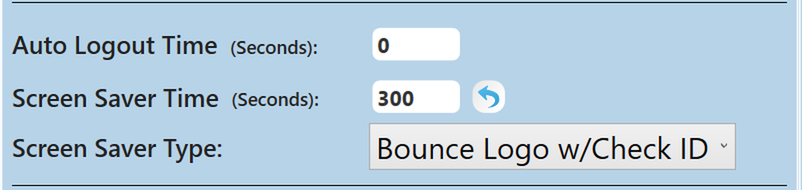
12. Auto Logout Time: Set how many seconds of inactivity will pass before the system automatically logs the user out. Helps prevent unauthorized use if someone walks away.
13. Screen Saver Time: Set how many seconds of inactivity it takes before the screen saver activates.
Note: If you see a blue arrow next to any setting, it means the number here is different from the Backoffice default. Tap the arrow to quickly revert to the default setting.
14. Screen Saver Type: Choose what the terminal displays when idle. Options include:
a. None
b. Black Screen
c. Bounce Logo
d. Bounce Logo w/Check ID

15. Tables View Single Touch / Order View Single Touch: When enabled on either the Table view or Order view screens, you only need a single click to open the table.
Downside to this setting: You will need to Press and hold to "Select" the table, to use any of the options that are at the bottom of the screens (example: Print ticket, fast cash, transfer & combine). Increasing time and efficiency on those screens.
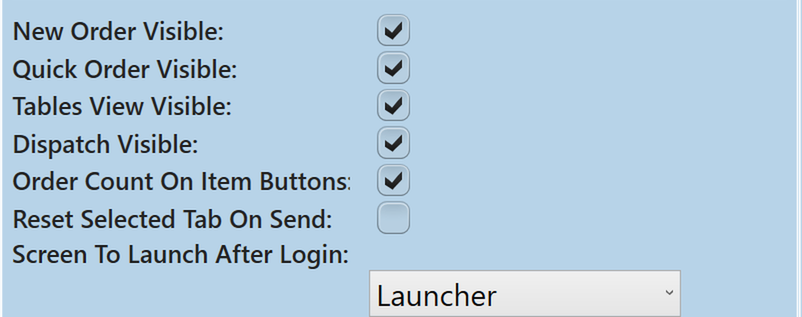
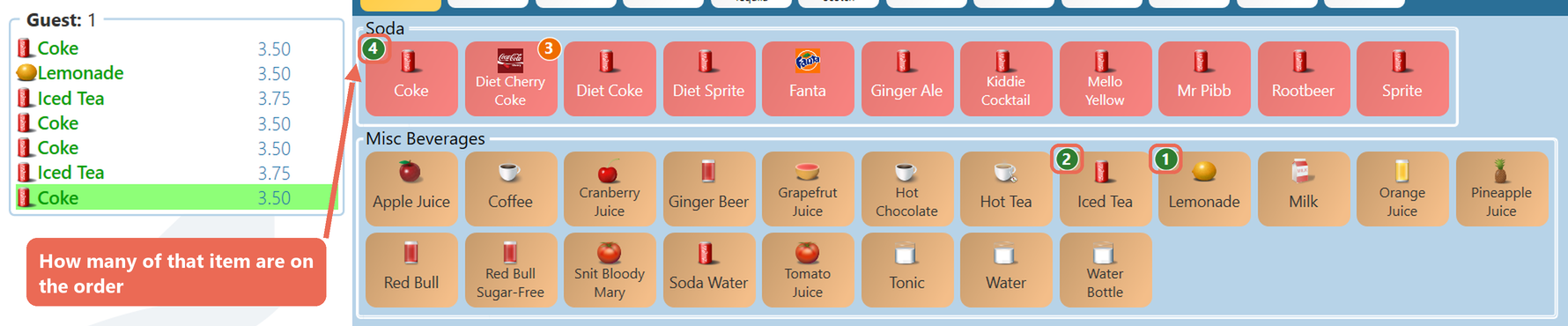
17. Order Count On Item Buttons: When checked, each item button on the order screen shows a green bubble with how many of that item are on the current order (for example, 4 on Coke when four Cokes are rung in). It’s on by default; uncheck it on a terminal where you don’t want the bubbles.
Note: The setting for the whole store is in Backoffice --> POS --> Settings --> Terminal Setup --> Terminal Settings tab. The check box here changes it for this terminal only.
18. Reset Selected Tab On Send: Decides which tab the next order opens on after you send an order.
-
Off (the default): the next order opens on the last tab you used. For example, Sally Server rings in a dessert on the Desserts tab and taps Send; her next order opens on the Desserts tab.
-
On: when you send an order and leave it, the terminal goes back to where it starts after logging in, and the next order opens on the starting tab: the Screen Tab of the job role you are clocked in as, or the first tab if it has none. Sally sends the same dessert, and her next order opens on the first tab again.
It works with Send, Send to Kitchen, and the send that happens when you leave an order with new items. Send/Stay, paying an order and leaving an order without changing anything keep the last tab.
Note: The setting for the whole store is in Backoffice --> POS --> Settings --> Terminal Setup --> Terminal Settings tab, under Misc Options. The check box here changes it for this terminal only.
19. Screen to Launch after Login: Set the screen that automatically opens when a user logs in. The default is the Launcher screen, but you can choose based on the station’s role:
-
Launcher (Default): Access to all options
-
New Order: Ideal for server stations needing to input table numbers and guest counts
-
Quick Order: Perfect for quick-serve environments
-
Table View: Ideal for server stations using a visual table layout to start new orders
-
Orders View: Opens the list of open orders, for stations that mostly pick up and pay existing orders
-
Dispatch View: Opens the Dispatch screen, for stations that send out delivery orders
Note: Someone clocked in under a job role that has its own Destination On Login starts on that screen instead.
No Comments