
How to add a new employee
This article will walk you through adding a new employee.
-
Log into Backoffice.
-
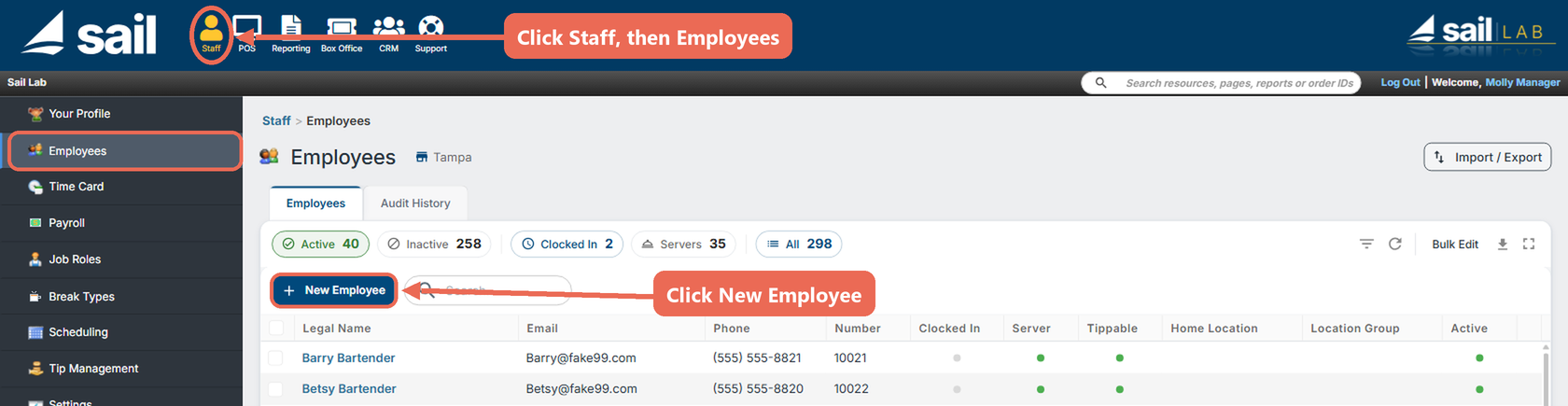
Click Staff at the top, then Employees in the menu on the left.
-
Click New Employee.
-
This will open a record for you to fill out your new employees information in order to add them to the system. The record has four tabs on the left: General, Contact, Employment and Payroll.
-
General
-
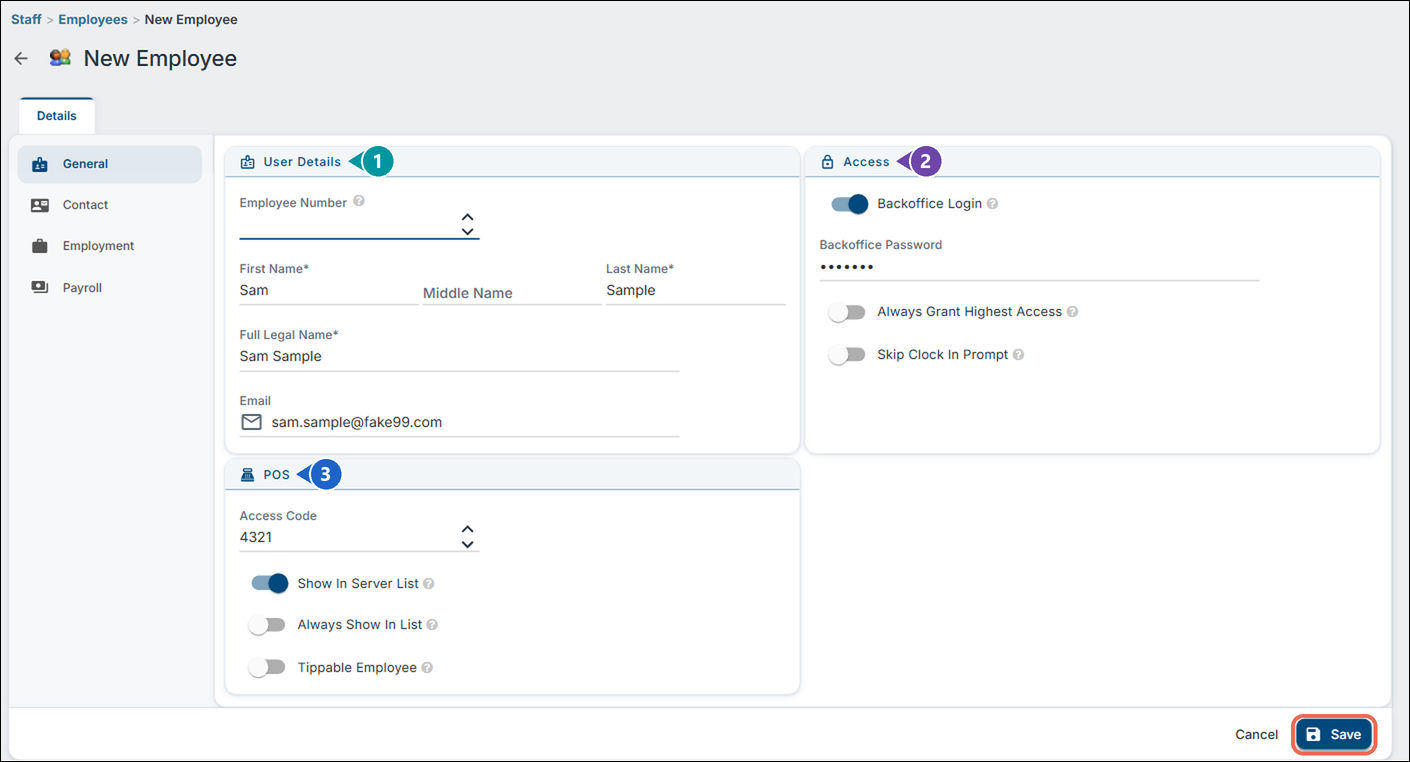
User Details (1): This section is not optional and must be completed in order to create the new employee. Only the fields marked with an * are required (if you turn on Backoffice Login, the Email is required too).
- Enter the preferred first name and last name as these will be displayed throughout the system.
- The Full Legal Name fills in from the first and last name. It can be modified if it is different than the preferred name. The full legal name will only be shown on Payroll reports.
- The Employee Number is used for payroll exports. If you use a payroll export, enter the employee's number from your payroll system. If you don't, leave it empty and the system gives the employee the next available number.
- The Email is required if the employee will log into Backoffice.
-
Access (2): This section is optional when creating a new employee.
- Turn on Backoffice Login to create a Backoffice login for the employee. (You will need to turn this on for anyone who will need to use Backoffice, and for everyone if you use Sail Scheduling, because it uses the same login)
- Once turned on, a Backoffice Password field opens right below it. The employee logs into Backoffice with their email address from User Details and this password.
- The password is not visible to anyone (including management or owners).
- Please keep in mind that the password is case sensitive.
- Always Grant Highest Access gives the employee the access of all their job roles, no matter which job role they are clocked in as.
- Skip Clock In Prompt: the system will not ask the employee to clock in when they log in.
-
POS (3): Fill this section in for anyone who will use the terminals or handheld devices.
- The employee “Access Code” is their personal log in number for the terminals and handheld devices. (It can be any number of digits long)
- “Show In Server List” (on by default): this employee will be visible in any of the server selection screens throughout the system. This will need to be turned on for any employee who plans on ringing in any orders.
- “Always Show In List” will force this employee to always be shown in the server list whether they are clocked in or not. This is generally used for generic “Bartender” users that don't clock in and out.
- “Tippable Employee”: the employee will be asked to report cash tips when they clock out, and will be eligible to give and receive submitted tipouts.
-
-
Contact
-
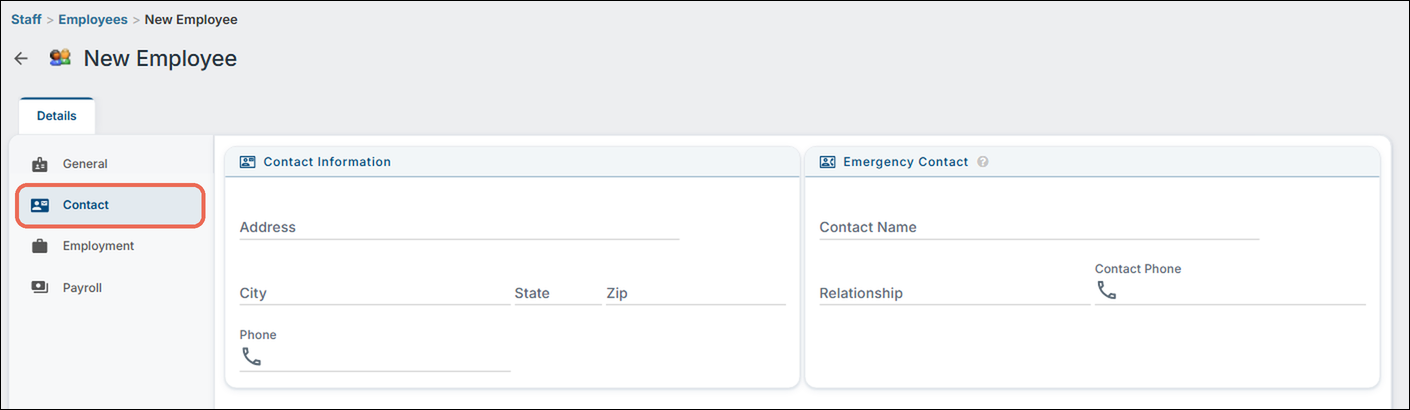
This section is optional when creating a new employee.
-
This section is where you can store the employees contact information and address, and an emergency contact.
-
The Phone number will show up on the employee schedule.
-
-
Employment
-
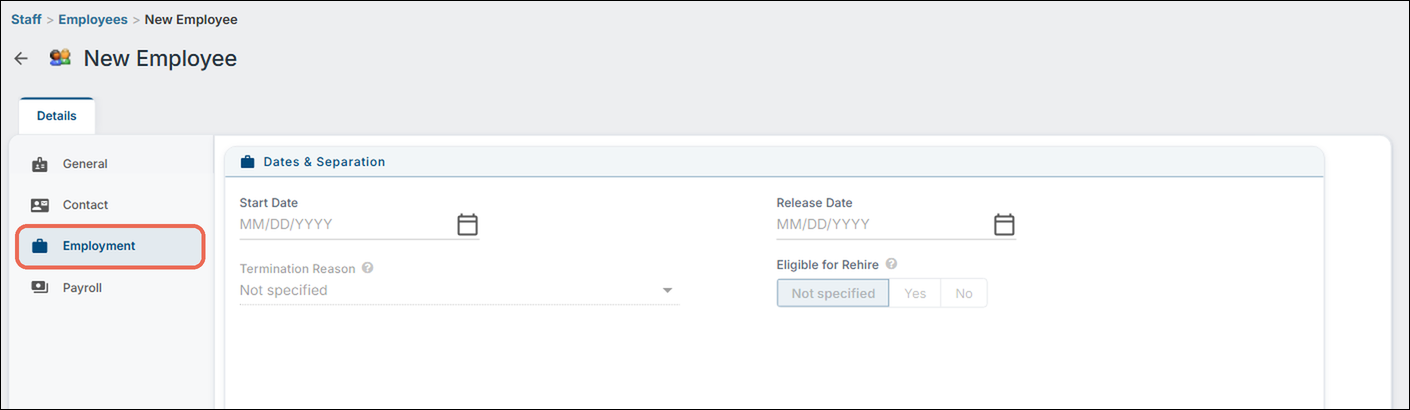
This section is optional when creating a new employee.
-
This is where you can place the employees start and release dates. Termination Reason and Eligible for Rehire are for when an employee leaves.
-
A new employee is active as soon as you save them. Active employees can log into and out of the terminals and devices.
-
-
Payroll
-
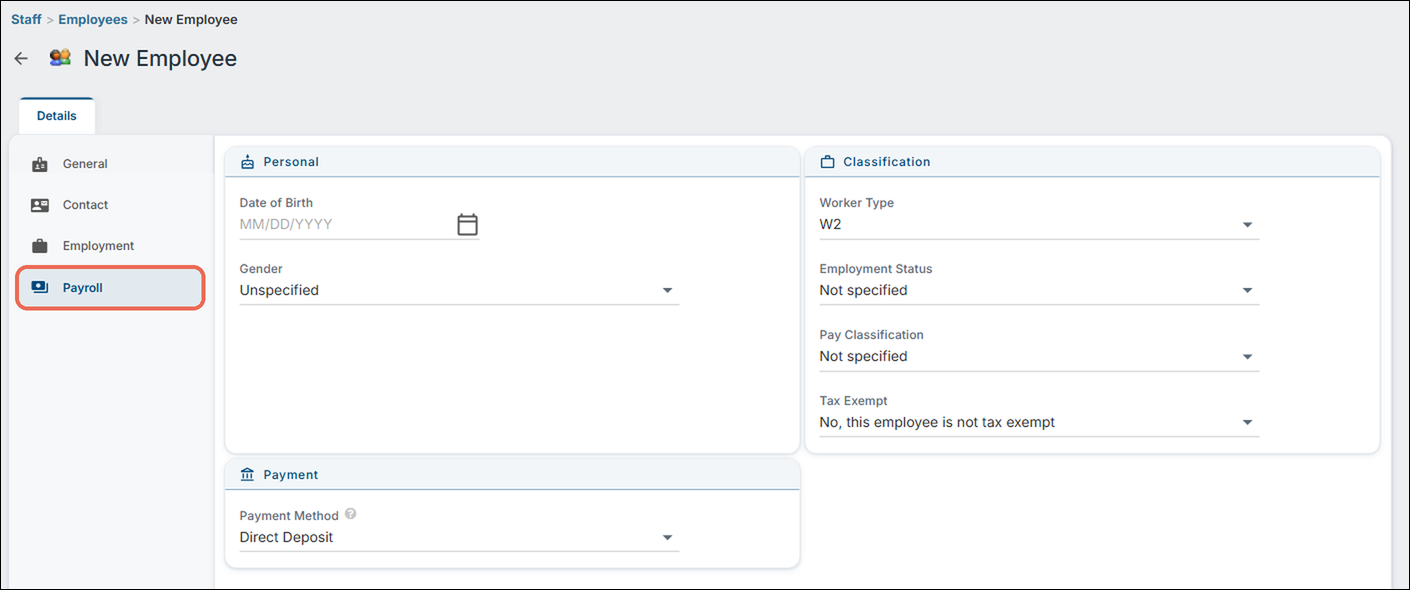
This section is optional when creating a new employee, unless you use Sail's integrated payroll system - then it must be filled out.
-
This is where you can store the employees date of birth, worker type, employment status, pay classification, tax exemption and payment method for payroll.
-
-
-
Once you have filled out the new employees information click Save at the bottom right to add the new record. Once the record is saved additional tabs will become available on the new employees record: Job Roles, Time Clock and Audit History.
-
Details: This tab stays the same after you create the new employee profile.
-
You would use this to edit the profile as discussed above after it has been created.
-
-
Job Roles: this tab is where you can assign job roles to your staff. Adding a job role is required: every employee needs at least one. (There are no limits on the number of job roles an employee can have.)
-
First click Assign Job Role to add a Job Role for the employee.

-
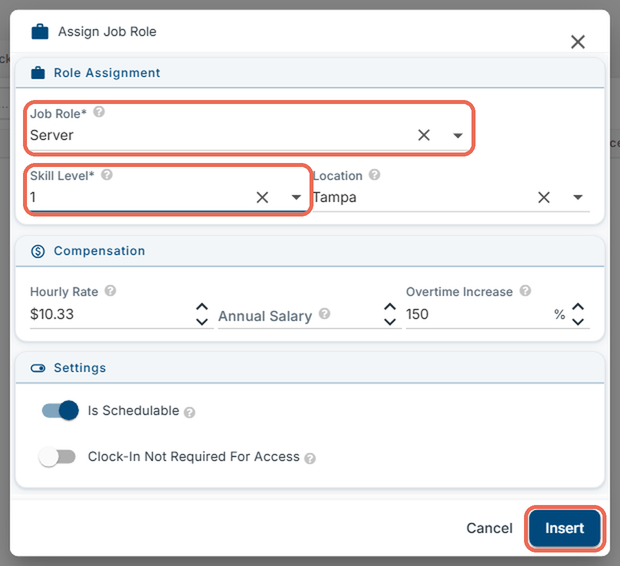
This opens a window to add a job role to the employees profile.
-
Fill out the window:
- Job Role (required): select it from the drop down list of pre existing Job Roles. Job Roles can be created and edited in Job Roles in Backoffice.
- Skill Level (required): pick the employee's skill level in this job role.
- Location: leave it empty for the job role to apply at all locations, or pick one location.
- Hourly Rate: what the employee is paid per hour in this job role.
- Annual Salary: use this instead of an Hourly Rate for a salaried employee.
- Overtime Increase: the percentage of the hourly rate paid for overtime hours (150% is time and a half).
- Is Schedulable: setting a Job role to be schedulable for the employee will only work if the job role itself is also set up to be schedulable. (This only needs to be turned on if you are using our scheduling system.)
- Clock-In Not Required For Access: the employee can use this job role's access without clocking in first.
-
Click Insert to add the job role.
-
-
No Comments