
KitchenHub Integration
KitchenHub Integration Setup
This document walks through the steps required to configure the KitchenHub DSP (Delivery Service Provider) integration in Sail Back Office. Once complete, the integration will allow you to connect DoorDash, Uber Eats, and Grubhub to a Sail location so that online orders flow directly into the POS.
Step 1: Create the Integration
In Sail Back Office, navigate to POS → System Setup → Integration.
1. Add a new record.
2. Name: Ingage DSP
3. Connection Type: Kitchen Hub
4. Click SAVE.
Step 2: Create Supporting POS Records
Before continuing, create the supporting records that the integration will reference: a DSP void reason, discount, placeholder item, order type, and tender.
DSP Void
• Create a new Void Reason called "DSP Void".
DSP Discount
• Create a new Discount called "DSP Discount".
DSP Placeholder Item
• Name: DSP Adjust
• Price: $0.00
• Tax Type: Food
• Reporting Group: Food
• Steering: All Printers / KVS Stations (common but not required)
Order Type
Create a separate Order Type for each delivery service provider being integrated (one for DoorDash, one for Uber Eats, one for Grubhub, etc.). Each provider should always have its own dedicated Order Type so reporting and routing stay clean. The settings on each Order Type should follow the restaurant’s preferences.
Tender
Create a new Tender that will be used to close out DSP orders. The two important settings on this new tender are:
• Payment Type: Set to Other.
• Include in Amount Due: Leave unchecked. The DSP collects payment from the customer, so this tender should not contribute to the order’s amount due.
PM Note — Smart Pricing (optional): Recommend Smart Pricing to every new integration. If the restaurant agrees, create a new Price Level for smart pricing and assign it to the DSP Order Types so DSP orders automatically use the marked-up pricing. Smart Pricing helps offset the commissions charged by the delivery service providers and is one of the easiest ways for the restaurant to recover margin on DSP orders. This step is not required for the integration to function.
Step 3: Online Ordering Configuration
1. Update the Site Name. By default the Online Ordering site is named "Main". Update this to "Restaurant Name — Location" so the menu is easy to identify once it syncs over to KitchenHub.
2. Associations Tab. Add the integration created in Step 1 to the DSP Integration field, then click SAVE.
Step 4: DSP Tab Configuration
Once the DSP integration is added on the Associations tab, a new DSP tab becomes available within Online Ordering Configuration. The remaining setup happens here.
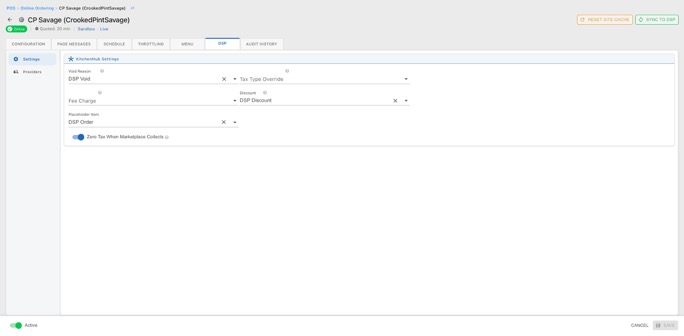
Settings
1. Void Reason: Select the new DSP Void from the dropdown.
2. Discount: Select the new DSP Discount from the dropdown.
3. Placeholder Item: This is a "catch-all" item used for special instructions, delivery instructions, and driver information. Select the DSP Adjust item created in Step 2 from the dropdown.
4. Zero Tax When Marketplace Collects: Toggle ON (always required in MN).
5. Sync to DSP: Click Sync and wait for the provider status to change from "Waiting" to "Connected" before continuing. This is an important step — do not skip it.
Providers
DoorDash, Uber Eats, and Grubhub are each added from this section. Use the Provider dropdown to select the provider you would like to add and then click Add Provider.
After clicking Add Provider you will be redirected to the KitchenHub Connect website to complete the connection.
Important: If the restaurant previously had this DSP integrated with another POS system, that existing integration must be disconnected before a new one can be created. The disconnect can be done by the restaurant through the DSP’s Merchant portal, or by calling the DSP’s support team. Skipping this step will cause the new integration to fail.
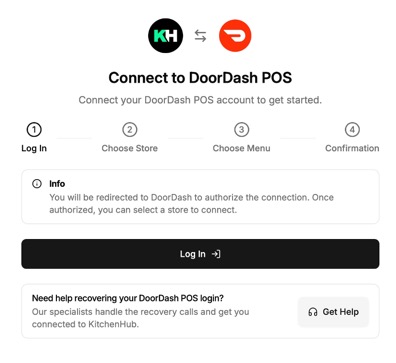
Step A: Log In
Click the Log In button and enter the restaurant’s DSP provider username and password.
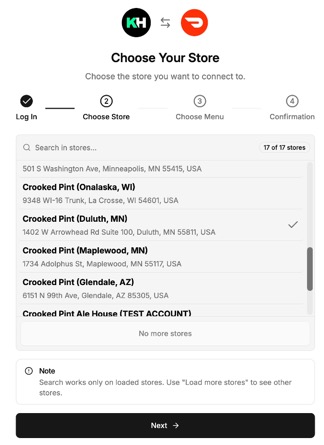
Step B: Choose Store
Use the Choose Store screen to select the restaurant or location you would like to connect.
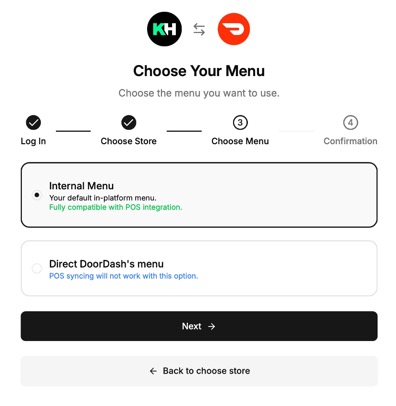
Step C: Menu Selection
Select the Internal Menu when prompted.
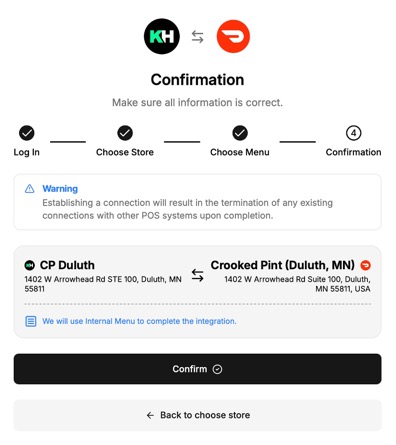
Step D: Confirmation Screen
Verify that the location matches the restaurant being connected, then click Confirm.
Step E: Completed
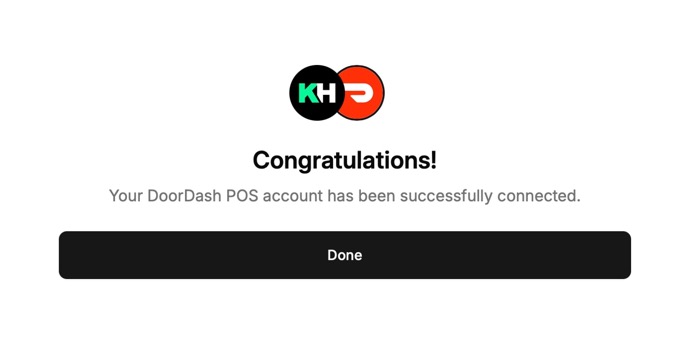
Once the connection completes, click the Done button to return to Sail Back Office.
Grubhub Exception
Grubhub does not require you to log in. Instead, you will be prompted to paste in the restaurant’s Grubhub URL. Once submitted, it can take up to 7 days for Grubhub to approve the integration on their side.
Sail Provider Settings
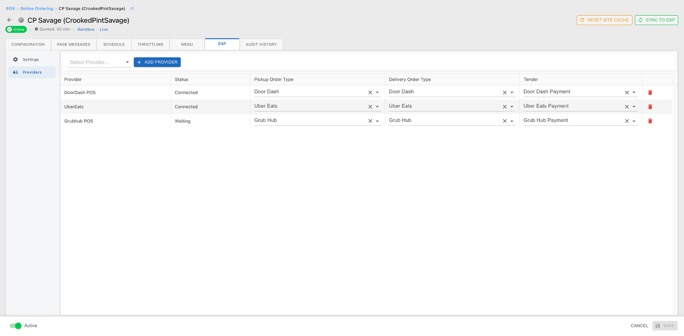
Once you return to Sail Back Office, you will need to map the order types and tender for each provider on the Sail Provider Settings screen. The records selected here are the Order Type and Tender that were already created in Step 2 — you should not need to create anything new at this stage.
1. Pickup Order Type: Select the provider Order Type created in Step 2.
2. Delivery Order Type: Usually set to the same value as Pickup, but it can be different if the restaurant prefers to report pickup and delivery separately.
3. Tender: Select the provider tender created in Step 2 (e.g. DoorDash Payment).
Final Sync
A final sync is required every time a new provider is added. After completing the steps above for each provider (DoorDash, Uber Eats, Grubhub), run the sync to push the menu and configuration out to KitchenHub.
Key Takeaways
Once the integration is live, the way DSP orders flow through the restaurant changes in a few important ways. Review these points with the restaurant before going live:
• Accepting orders: This is no longer required. Orders inject directly into the POS.
• Cancelled orders: Orders will automatically be voided in the POS if a customer cancels an order. The cancellation will reflect on the order and on the Kitchen Video screens.
• Out-of-stock items: If you 86 an item, it will update in the POS and push out to the DSPs.
• Refunds: Refunds still need to be processed from the DSP’s tablet or via a phone call to the DSP, depending on the provider.
• KVS / Online Ordering: Turning off Online Ordering will also turn off the DSPs.
• Pause / Busy Mode: You can still use Pause or Busy Mode from the DSP’s tablet.
• Order verification: For the first couple of weeks, verify that each order successfully injects into the POS. Injected orders can be found under "Closed" orders.
No Comments